
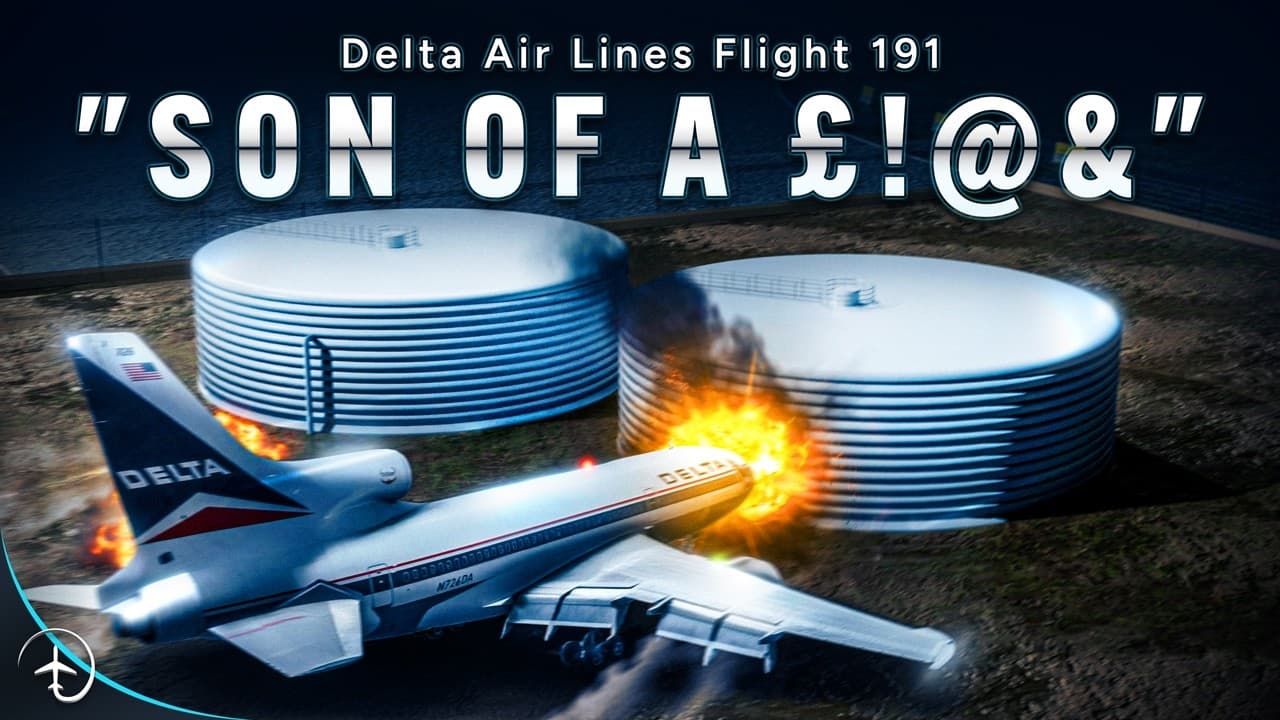
Delta 191: microburst bij Dallas-Fort Worth in 1985
 17:49VOLGENDE VIDEOAsiana 214 ongeval: Taking Off over valse pilootnamen
De video vertelt over Delta Flight 191, dat in Dallas-Fort Worth door een microburst neerstortte. De spreker beschrijft de aanloop en de nasleep.
VOLGENDE STAP · ONGEVALDelta Air Lines 191, Dallas-Fort Worth (2 augustus 1985)Wat er gebeurde en wat het onderzoek zegtDe video uitgelegd
De vlucht en de bemanning
Op de middag van vrijdag 2 augustus 1985 stappen passagiers in Fort Lauderdale in voor Delta Flight 191 naar Los Angeles met tussenstop Dallas. De spreker noemt een Lockheed L-1011 TriStar met registratie November 7-6 Delta Alpha, geleverd in februari 1979, met ruim 19.000 flight hours en bijna 8.400 flight cycles. In de cockpit zitten een ervaren captain van 57 jaar, een first officer van 42 jaar die eerder als line check airman diende, en een flight engineer. Aan boord zijn 152 passagiers en acht cabin crew members.
De route en het weer
Voor vertrek had de bemanning de weather forecast bekeken en zag onweersbuien langs de Gulf Coast en convective activity in de buurt van Dallas. Na New Orleans vroeg de crew een noordelijker track om buien te vermijden, wat 10 tot 15 minuten kostte door arrival sequencing bij Dallas-Fort Worth. De spreker beschrijft het vliegveld als druk, met parallelle runways en onweerscellen die typisch zijn voor een Texaanse zomer. Bij de approach kopieerde de crew ATIS: landingen op runway 17L onder visual flight rules, scattered clouds op 6.000 ft, broken layer op 25.000 ft, visibility 15 miles, lichte zuidelijke wind en thunderstorms in de buurt.
De aanpak en de microburst
Een controller gaf eerst een heading die de captain afwees omdat hij dichter bij een grotere stormcel zou komen; daarna kreeg de crew een bredere vector. Een kleinere regenbui ten noorden van runway 17L groeide op, maar leek op radar en voor controllers niet gevaarlijk. De spreker zegt dat het ATC-radar vooral aircraft positions liet zien en geen betrouwbare stormintensiteit gaf. LLWAS meldde variable winds door een shower op short final. Een Learjet vloog erdoor zonder noemenswaardige problemen. De L-1011 ging de precipitation in, versnelde van 150 kt naar 173 kt en driftte boven de glide slope. De first officer verlaagde thrust; daarna kwam een downdraft, de captain riep om speed te bewaken, en de bemanning voerde routine correcties uit.
De spreker legt uit dat onder de storm een microburst ontstond: een compacte downdraft die zich naar buiten verspreidt en sterke horizontale winds kan geven. De spreker zegt dat een aircraft eerst headwind ervaart, daarna snelheid verliest door het verdwijnen van die headwind en de downdraft, en vervolgens tailwind tegenkomt. Delta Flight 191 verloor 44 kt in 10 seconden, kreeg extreme turbulence, een stick shaker, ground proximity warnings en ging op ongeveer 400 ft met een sterke daling. De controller riep go around, maar de main landing gear raakte een open veld bijna twee miles short van runway 17L.
De spreker beschrijft dat het vliegtuig over het veld vloog, Texas State Highway 114 kruiste, met de left engine een auto raakte en daarna in een water tank botste. De voorste fuselage werd vernietigd, de tail section scheidde, brand ontstond en reddingsdiensten kwamen binnen een minuut. De spreker noemt 135 doden na afloop van de directe redding, waaronder 134 aan boord en de bestuurder van de auto; twee overlevenden stierven later, totaal 137. Hij zegt dat onderzoek geen mechanical failures vond en dat het incident de ontwikkeling van TDWR, predictive wind shear radar en windshear escape training versnelde.
Zoek in het transcript
Meer over incidenten en onderzoek
 1:01Delta en Air Canada raken elkaar op LAX: luchtbeelden KTLAKTLA 5 · 1:01
 11:26Cessna A185F Skywagon: ongeval in Utah bij Dark CanyonAir Safety Institute · 11:26
 29:31Motorstoringen: 22 incidenten volgens Military ExpertMilitary Expert · 29:31
 1:30Reno: noodlanding op snelweg en turbulente Boeing 777CBS Evening News · 1:30